Dental Crowns: Materials, the Two-Visit Process, and How Long They Actually Last
A dental crown is a custom-made cap that covers a tooth completely, restoring its shape and letting it take normal chewing force again. It’s one of the most common ways to save a tooth that’s too damaged for a filling but healthy enough at the root to keep.
A dental crown is a custom-made cap that covers a tooth completely so it can take normal chewing force again. It usually takes two appointments about one to two weeks apart, and a heavily damaged tooth may need a core build-up or a post first. Zirconia and all-ceramic suit visible teeth; zirconia and metal suit hard-working molars.
The part patients underestimate is that a crown is rarely just a crown. Whether the tooth needs supporting work underneath, and which material suits it, both change what your treatment plan looks like.
When do you need a dental crown?
Your dentist may recommend one when:
- The tooth has had a root canal, particularly a molar
- A large filling has left too little structure to support another filling
- The tooth is cracked, fractured, or significantly worn
- A previous restoration keeps failing in the same tooth
- The tooth is badly discoloured or misshapen and you want its appearance restored
- The tooth is an abutment for a bridge, or the crown is going onto an implant
Molars after a root canal are the clearest case. They handle the heaviest load in your mouth and become brittle once the pulp is removed, so full coverage isn’t cosmetic — it’s what stops the tooth splitting.
Why might you need a build-up or post first?
A crown caps a tooth, but the tooth underneath has to be strong enough to hold it. When decay or a root canal has hollowed things out, the foundation gets rebuilt before the crown is made.
A core build-up rebuilds the inner tooth so there’s something solid for the crown to sit on. This is common on heavily damaged teeth and is a separate procedure from the crown itself.
A post anchors that build-up when very little natural tooth remains — most often after a root canal on a tooth that was already extensively restored.
This is why a crown treatment plan on a badly broken tooth involves more steps than one on an intact tooth being crowned for cosmetic reasons. Ask what your plan includes so the sequence is clear from the start.
Which crown material is best?
The material is the biggest single decision, and it’s genuinely a trade-off rather than a ranking.
| Material | Best suited to | What to know |
|---|---|---|
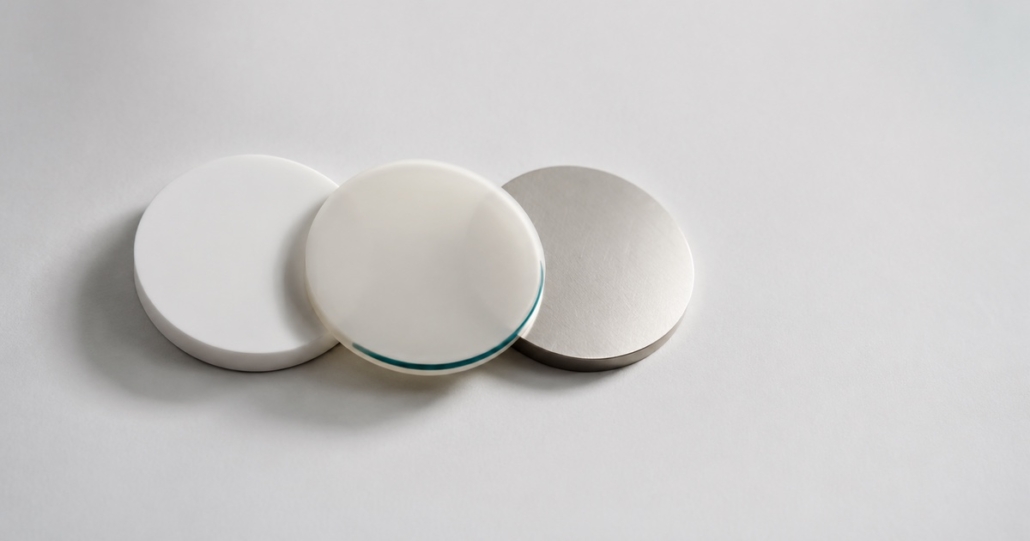
| Zirconia | Back teeth, grinders | Extremely strong and increasingly natural-looking. The modern default for molars. |
| All-ceramic / porcelain | Front teeth | Best aesthetics — translucency closest to natural enamel. Lithium disilicate performs very well in the data. |
| Porcelain-fused-to-metal | Either | Long track record and strong. A thin metal line can become visible at the gum as gums recede over years. |
| Gold / metal alloy | Back molars | Very durable and gentle on the opposing tooth, but unmistakably metallic. |
For a visible front tooth, most people choose all-ceramic or zirconia. For a molar doing heavy work, strength usually wins.
What happens when you get a crown?
A conventional crown takes two appointments.
- First visit — preparation. The tooth is numbed and shaped so the crown will fit over it. If a build-up or post is needed, that’s done now.
- Impression or digital scan. A record of the prepared tooth and your bite goes to the laboratory.
- Temporary crown. A temporary protects the prepared tooth while the permanent one is made.
- Laboratory fabrication. A dental laboratory makes your custom crown, usually over one to two weeks.
- Second visit — fitting. The temporary comes off, the permanent crown is checked against your bite, adjusted, and cemented.
The preparation appointment is done under local anesthetic and feels much like having a filling. The main thing to know about the temporary is that it’s held with soft cement by design, so it can come off — avoid sticky foods, floss by pulling the floss out sideways rather than up, and call if it comes loose. It’s a quick fix, not an emergency, but don’t leave it.
How long do dental crowns last?
The largest real-world dataset available — roughly 1.2 million crowns placed in general practice in England and Wales — found 77% still in service at five years, 63% at ten years, and 53% at fifteen years, with a median service life of about sixteen years.
Controlled studies of individual materials report better short-term numbers: five-year survival of 94.7% for metal-ceramic and 96.6% for lithium disilicate in one systematic review.
Both sets of figures are real. The controlled studies tell you what a crown can do; the population data tells you what crowns do on average across every patient, every tooth, and every circumstance. A well-made crown commonly lasts well over a decade, and “permanent” is not the right word for it.
| Crowns still in service | Share |
|---|---|
| At 5 years | 77% |
| At 10 years | 63% |
| At 15 years | 53% |
What extends it: cleaning carefully around the gumline where the crown margin sits, not chewing ice or hard candy, and wearing a night guard if you grind. Grinding is the most common reason a crown fails early, and a guard is a small, straightforward intervention.
Does insurance cover dental crowns?
Most plans classify a crown as a major restorative service, reimbursed at around 50% — noticeably less than the 70–80% typical for basic work like fillings. Crowns also draw heavily on your annual maximum, which commonly sits between $1,000 and $2,500.
Under the Canada Dental Care Plan, crowns are covered when clinically necessary but require preauthorization before treatment. Cores and prefabricated posts placed with a core also need approval.
Because of all that, a predetermination is worth requesting on any crown. We send the proposed treatment to your insurer, they confirm in writing what they’ll cover, and you know your share before the tooth is prepared. Mellow Family Dental Care direct-bills all insurance companies.
Common questions
Does getting a crown hurt? The appointment is done under local anesthetic and is comparable to having a filling. Some tenderness in the gum for a day or two afterward is normal.
Why does my treatment plan have more than one item on it? Because a build-up, a post, and the crown are separate procedures. On a heavily damaged tooth, more than one is often needed. Ask which apply to your tooth.
Which material should I choose? Zirconia or all-ceramic for visible teeth, zirconia or metal for hard-working molars. Your dentist will factor in your bite, whether you grind, and how visible the tooth is.
How long will it last? Commonly well over ten years, with about half still in service at fifteen in large real-world datasets. Care and bite forces matter more than material for most people.
Can a crowned tooth still get a cavity? Yes — at the margin where the crown meets the tooth. The crown itself can’t decay, but the natural tooth underneath it can, which is why cleaning that gumline properly matters so much.
My temporary crown came off. Is that an emergency? No, but call the office. The prepared tooth underneath is sensitive and can shift slightly if left uncovered, which affects the fit of the permanent crown.
Related reading
To have a damaged tooth assessed, call Mellow Family Dental Care at 604.457.2273, or visit us at Unit 150–20528 Lougheed Highway in West Maple Ridge.
Sources: Burke FJT, Lucarotti PSK. British Dental Journal 2018;225:1011–1018. Link · Sailer I, et al. Dental Materials 2015;31(6):603–623. Link · CDCP coverage
This article is general information and does not replace an in-person dental exam.

