Dental Implants: How the Process Works and Who Does What
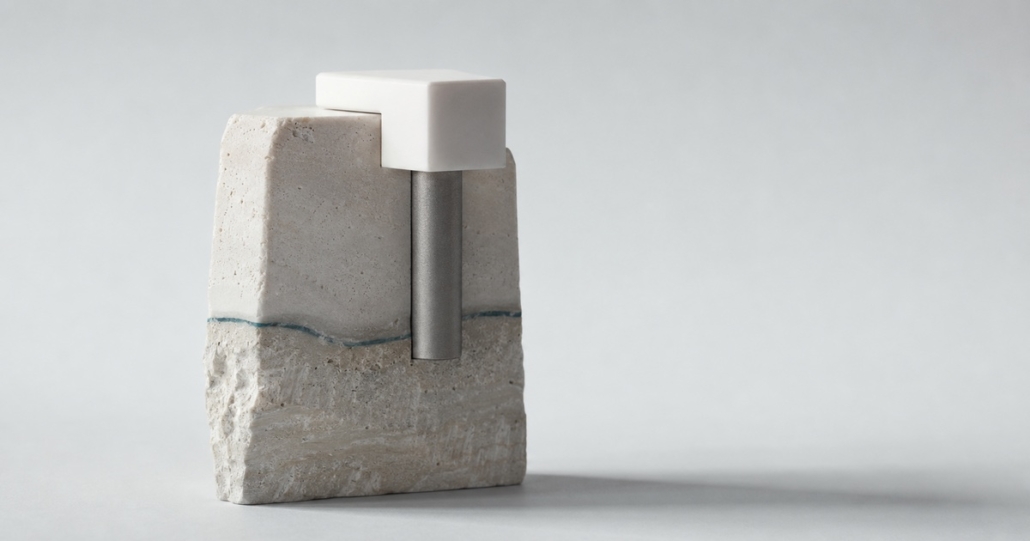
A dental implant has three parts: a titanium post placed in the jaw, an abutment, and a crown. Treatment splits into a surgical phase and a restorative phase, often handled by different clinicians. The whole process takes three to six months, most of it waiting for bone to integrate with the post. Around 93–96% of implant posts survive to ten years.
Most people picture an implant as one appointment. It’s a sequence that unfolds over months, and it usually involves more than one clinician — which is the part patients are least prepared for and the part that causes the most confusion about who to call when.
What is a dental implant made of?
The post is a titanium screw placed into the jawbone, taking the role of a natural tooth root.
The abutment is the connector that sits on top of the post, above the gumline.
The crown is the visible replacement tooth attached to the abutment.
| Component | What it is | Usually placed by |
|---|---|---|
| The post | A titanium screw set into the jawbone, taking the role of a natural tooth root | An oral surgeon or periodontist |
| The abutment | The connector that sits on top of the post, above the gumline | The restoring dentist |
| The crown | The visible replacement tooth | The restoring dentist |
Those three components are often placed at different appointments by different people, and they have different lifespans. More on that below.
Who performs each part of implant treatment?
Implant treatment splits into a surgical phase and a restorative phase.
The surgical phase is placing the post, along with any bone grafting or sinus lift needed to create adequate bone. This is frequently done by an oral surgeon or periodontist, though some general dentists place implants as well.
The restorative phase is everything visible: designing, fabricating, and fitting the abutment and crown so it matches your other teeth and works correctly against your bite.
At Mellow Family Dental Care we handle the restorative side. Our crown and bridge services include implant-supported crowns and bridges, and Dr. Makhani will assess your case, plan the restoration, and manage the crown work. Where a case requires surgical placement or grafting, we coordinate with a specialist for that stage and take care of the restoration on top. If you’re at the stage of wondering whether an implant is even the right option for your situation, that assessment is a good place to start — and sometimes the answer is that a bridge or a partial suits your mouth better.
How long does a dental implant take?
- Assessment and imaging. Clinical exam plus 3D imaging to evaluate bone volume and plan exactly where the implant goes relative to nerves and sinuses.
- Extraction and grafting, if needed. If the tooth is still present or bone volume is insufficient, this comes first, with healing time before placement.
- Placement. The post is surgically placed into the jaw under local anesthetic.
- Osseointegration. The bone grows into and around the implant surface. This takes roughly three to six months and can’t be rushed — it’s the entire foundation of the result.
- Abutment and crown. Once integrated, the connector is attached and the final crown is fitted.
The long part isn’t the surgery; it’s the waiting for integration, and a temporary solution can usually bridge the visible gap in the meantime.
How long do dental implants last?
This is where a lot of dental content oversells, so here are the real figures.
The implant post does well. Pooled ten-year survival lands around 96%, dropping to roughly 93% once patients lost to follow-up are properly accounted for. A study of routine clinical practice, rather than a controlled trial, found 82.9%. Twenty-year data exists but rests on a small number of studies using implant surfaces no longer on the market, so treat very long-range figures cautiously.
The crown on top is a separate lifespan, and a shorter one. Implant-supported single crowns run at roughly 89% survival at ten years; implant-supported bridges at roughly 80%. So roughly one in five implant bridges needs replacing within a decade while the implant beneath it is still counted a success. Any source quoting an implant lifespan without separating the fixture from the restoration is blurring two different numbers.
| What’s being measured | Figure |
|---|---|
| Implant post survival at 10 years (pooled) | ~96%, or ~93% once patients lost to follow-up are counted |
| Implant post survival at 10 years (routine practice) | 82.9% |
| Implant-supported single crown at 10 years | ~89% |
| Implant-supported bridge at 10 years | ~80% |
| Patients free of any complication at 5 years | ~66% |
| Patients affected by peri-implantitis | ~22% |
Complications are common enough to plan for. Only around 66% of implant patients are free of any complication at five years. Peri-implantitis — inflammation with progressive bone loss around the implant — affects roughly 22% of patients, and prevalence rises with time in service.
No professional body claims implants last a lifetime. They’re a strong, well-evidenced option that requires ongoing maintenance, which is a different and more useful claim.
Do dental implants really prevent jawbone loss?
You’ll read everywhere that implants uniquely preserve or “stimulate” the jawbone. The accurate version is narrower.
Losing a tooth genuinely does cause bone loss — around 3.8 mm of ridge width in the first six months, with roughly two-thirds of the change happening in the first three months. That part is well established.
But implants don’t prevent it. The research group that established the resorption findings also placed implants into fresh extraction sockets and reported that doing so failed to prevent the remodelling of the socket walls. And implants themselves lose a small amount of crestal bone over time — pooled at just over 1 mm at twenty years or more.
The real benefit is local and measurable rather than sweeping. In one ten-year comparison, posterior mandibular ridge height loss was 0.69 mm for patients with an implant-retained overdenture against 1.63 mm with a conventional denture. That’s a genuine advantage, and it’s a narrower one than the usual phrasing suggests.
The reason this matters: bone preservation is often the argument used to steer someone toward implants specifically. It’s a real factor, and it should be weighed at its actual size.
How do you care for a dental implant?
Implants don’t decay. The gum and bone around them absolutely can deteriorate, and that’s what ends most implants that fail.
- Brush and floss daily, including specifically around the implant. Interdental brushes or a water flosser are worth the addition.
- Keep regular hygiene appointments. Implants need professional monitoring — early peri-implantitis is treatable and late peri-implantitis often isn’t.
- Don’t smoke. It’s among the strongest predictors of implant failure.
- Wear a night guard if you grind. Implants have no periodontal ligament to cushion force, so grinding transfers directly into bone and restoration.
Does insurance or the CDCP cover implants?
Straightforward and not in your favour: the Canada Dental Care Plan excludes implants entirely — the post, implant-supported crowns, and bone grafts are all listed exclusions.
Most basic private plans don’t cover the surgical portion either. Some enhanced or employer plans contribute toward the crown. If you have extended benefits, ask specifically what’s covered on the restorative side, and request a predetermination so it’s confirmed in writing. We direct-bill all insurance companies for whatever portion your plan does cover.
Common questions
Does getting an implant hurt? Placement is done under local anesthetic. Most patients describe recovery as easier than expected, with soreness handled by over-the-counter pain relief.
How long does the whole process take? Typically three to six months from placement to final crown, most of it osseointegration. Extractions or grafting add to that.
How long will an implant last? The post commonly lasts well over a decade, with around 93–96% surviving to ten years depending on how dropouts are counted. The crown on top typically needs attention sooner. Both figures matter.
Is an implant better than a bridge? For a single tooth with sound neighbours, often yes — it doesn’t require reshaping healthy teeth. If those neighbours need crowns anyway, a bridge becomes much more attractive. Bone volume, coverage, and timeline all factor in.
Will insurance or the CDCP cover it? The CDCP excludes implants completely. Most basic private plans don’t cover the surgical portion, and some enhanced plans cover part of the crown. More on insurance.
Can anyone get an implant? Not everyone. Adequate bone volume is required, and grafting isn’t always possible or advisable. Uncontrolled diabetes, heavy smoking, and some medications — bisphosphonates in particular — affect suitability. That’s what the assessment establishes.
Who do I call if something feels wrong? Depends on the stage. During healing after placement, the surgeon who placed it. Once restored, your restoring dentist. Ask for that to be spelled out at the start of treatment — it saves confusion later.
Related reading
Wondering whether an implant is right for you, or already have one placed and need it restored? Call Mellow Family Dental Care at 604.457.2273, or visit Unit 150–20528 Lougheed Highway in West Maple Ridge.
Sources: Howe MS, Keys W, Richards D. Long-term (10-year) dental implant survival: A systematic review and sensitivity meta-analysis. Journal of Dentistry 2019. · Pjetursson BE, et al. Comparison of survival and complication rates of tooth-supported and implant-supported prostheses. Link · Derks J, Tomasi C. Peri-implant health and disease. Link · Araújo M, Sukekava F, Wennström J, Lindhe J. J Clin Periodontol 2005;32:645–652. · Tan WL, et al. A systematic review of post-extractional alveolar hard and soft tissue dimensional changes. 2012. · CDCP coverage
This article is general information and does not replace an in-person dental exam. Suitability for implant treatment can only be established through clinical assessment and imaging.

